Switching property management companies can feel risky for rental property owners, especially if the previous experience was disorganized, slow, or stressful. For owners in Studio City and the greater Los Angeles rental market, the handoff matters because even small gaps in communication, rent collection, maintenance, or lease records can create bigger problems later.
LOS ANGELES PROPERTY MANAGEMENT GROUP approaches the first 100 days as the most important part of the transition. This is when records are cleaned up, tenants are introduced to the new process, rent collection is stabilized, and owners start getting clearer visibility into how their property is performing.
Key Takeaways
- If your current property manager is creating more work for you, the first 100 days should focus on removing tasks from your plate.
- If tenant communication has been unclear, a structured transition helps reset expectations quickly.
- If records, leases, or rent details are messy, early document collection prevents avoidable problems.
- If you are unsure whether switching is worth it, the transition process shows what professional management should look like.
- If you own in Studio City or Los Angeles, local rental operations need strong systems from day one.
Why the First 100 Days Matter So Much
The first 100 days after switching property managers are not just an onboarding period. They are the foundation for how the property will operate moving forward.
A good transition answers important questions right away:
- Who owns the property and who should receive reports?
- Where should rental income be deposited?
- Are the current lease terms accurate?
- Do tenants know how to pay rent and request maintenance?
- Are vendors, invoices, insurance, and property details properly documented?
- Is the owner receiving clear financial reporting?
When these items are handled early, the owner gets fewer surprises. When they are ignored, the owner often ends up stuck between the old management company, the new company, the tenant, and unpaid bills.
That is why switching management should not feel like taking on a second job. The goal should be the opposite: less involvement, more structure, and better visibility.
Step One: Build a Clean Property File
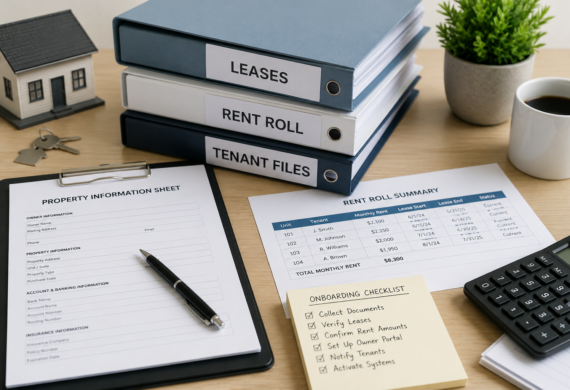
The transition starts with information gathering. This part can feel tedious, but it is one of the most important steps.
A professional management company should request the essentials upfront, including:
- Owner contact information
- Banking details for distributions
- Insurance information
- Current rent roll
- Signed leases and lease addenda
- Tenant contact details
- Security deposit records
- Recent invoices
- Maintenance history
- Vendor information
- HOA information, if applicable
This is not busywork. A clean property file allows the new management team to verify the facts before they start making decisions.
For example, the rent roll should match the lease. The tenant’s contact information should be current. The security deposit balance should be documented. Insurance records should be on file. If a tenant claims something different from what the lease says, the management team needs the right records available immediately.
Rental property owners also need organized records for income, expenses, and year-end reporting. The tax treatment of rental income and expenses depends on accurate documentation, which makes strong recordkeeping important from the beginning rental income and expense records.
Step Two: Notify Tenants and Reset Communication
Once the property information is collected, tenants need to know what changed.
This is where many transitions either improve quickly or become confusing. Tenants should not be left guessing about where to pay rent, who to contact, or how maintenance requests are handled.
A proper tenant welcome letter should explain:
- Who the new property manager is
- When the new management begins
- How rent should be paid
- Where maintenance requests should be submitted
- Who to contact for emergencies
- What information tenants need to update
- What stays the same under their current lease
For Los Angeles rental properties, written communication is especially important because owners and managers need a clear record of notices, instructions, and tenant contact procedures. The goal is to remove confusion before the next rent cycle begins.
Owners who have already dealt with poor communication often recognize this as one of the early signs that it may be time to change management. If that sounds familiar, reviewing the warning signsthat it may be time to find a new property manager can help put the situation into perspective.
Step Three: Verify Leases, Rent Amounts, and Tenant Data
Before the first rent cycle under new management, the management company should verify the lease terms and rent details.
This includes confirming:
- Current monthly rent
- Lease start and end dates
- Security deposit amount
- Late fee terms
- Pet terms
- Parking or storage details
- Utility responsibilities
- Rent concessions or special agreements
- Any pending notices or tenant issues
This step matters because bad data creates bad decisions. If the system shows the wrong rent amount, the tenant may be charged incorrectly. If the lease end date is wrong, renewal planning may be delayed. If a special agreement is missed, it can create conflict with the tenant.
In a market like Los Angeles, where housing costs and tenant expectations are high, owners need clean information to make smart decisions. Local housing and rental market data can help owners understand the broader environment their investment operates in, including changes in asking rents and rental demand rental market data.
Step Four: Get Rent Collection and Maintenance Running
By the first full rent cycle, the new management systems should be active.

This is when owners should start seeing the practical benefits of the switch. Rent collection should move through the new system. Maintenance requests should be routed properly. Tenants should no longer be contacting the owner directly for routine issues.
A smooth first rent cycle usually includes:
- Tenant payment instructions sent clearly
- Rent charges entered correctly
- Online payment options activated, if available
- Maintenance request systems opened
- Emergency procedures communicated
- Owner reporting set up
For many owners, this is the moment where property management starts to feel like property management again. Instead of answering tenant texts, tracking down payments, or coordinating repairs after work, the owner has a team handling the day-to-day operation.
If you are preparing to move away from a previous manager, it also helps to think carefully about the handoff. Ending the relationship cleanly can reduce missing documents, delayed payments, and tenant confusion. These tips for ending things with your property manager are useful before making the switch official.
Step Five: Review the First Owner Statement
After the first full month closes, the owner statement should not just be sent and forgotten.

A good management team should walk the owner through it, especially during the first month. This helps explain what came in, what went out, and what the owner should expect moving forward.
The first owner statement should clearly show:
- Rent collected
- Management fees
- Maintenance expenses
- Vendor payments
- Reserves held
- Owner distributions
- Any unpaid charges or open balances
This is also a chance to catch anything unusual early. Maybe an old invoice came through. Maybe the tenant paid late. Maybe a repair was needed during the transition. These details are much easier to discuss in the first month than six months later.
Clear reporting is one of the biggest differences between reactive management and professional management. Owners should understand what is happening with their investment without having to chase someone for answers.
Step Six: Identify Operational Improvements
Once the basics are stable, the management company can start looking for ways to improve performance.
This does not always mean major changes. Sometimes the best improvements are simple:
- Tightening rent collection procedures
- Updating tenant communication
- Reviewing lease renewal timing
- Addressing deferred maintenance
- Improving vendor coordination
- Reviewing rental pricing before the next vacancy
- Cleaning up owner reporting
- Confirming insurance and compliance items
In Studio City, where rental properties can include single-family homes, condos, small multifamily buildings, and higher-value investment properties, small operational improvements can make a meaningful difference over time.
It also helps to understand the ownership landscape in Los Angeles County. Census housing data shows how large and complex the local housing market is, which is one reason rental operations need to be organized and well documented Los Angeles County housing data.
What Owners Should Expect by Day 100
By day 100, the property should feel more organized.
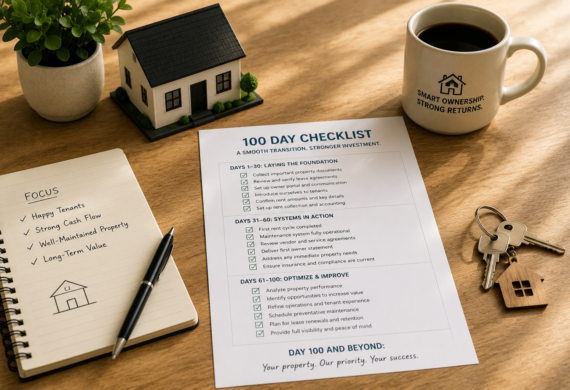
Tenants should know how to pay rent, where to submit maintenance requests, and who to contact. The owner should have access to clearer reporting. Lease data should be verified. Maintenance issues should be moving through a defined process. The management team should understand the property, the tenants, and the owner’s priorities.
That does not mean every property issue disappears. Rental properties still require repairs, tenant communication, compliance awareness, and financial oversight. But the owner should no longer feel like the central point of contact for every problem.
A strong first 100 days should create:
- Cleaner records
- Better tenant communication
- More reliable rent collection
- Clearer financial reporting
- Faster issue resolution
- Less owner involvement in daily tasks
- A more predictable management experience
If those basics are not happening, the management relationship may need another look.
Choosing the Right Property Manager Before You Switch
The first 100 days are much smoother when the owner chooses the right company before signing.
Before committing to a new property manager, owners should ask practical questions:
- What information do you collect during onboarding?
- How do you notify tenants?
- How do you handle rent collection?
- When will I receive my first owner statement?
- How are maintenance requests submitted and tracked?
- Who is my main point of contact?
- How do you handle existing leases and tenant issues?
- What happens during the first 30, 60, and 100 days?
These questions help owners understand whether the company has a real process or is simply reacting as issues come up.
Before signing anything, it is worth reviewing what to look for before signing a property management contract so you know what should be clear upfront.
Final Thoughts
Switching property managers should create relief, not more confusion. When the first 100 days are handled correctly, owners get cleaner records, tenants get clearer direction, and the property starts operating with more structure. For Studio City rental owners and Los Angeles investors, LOS ANGELES PROPERTY MANAGEMENT GROUP focuses on making that transition organized, practical, and easier to manage from the start.
Disclaimer: This content is for general educational purposes only and should not be considered legal, tax, or financial advice. Rental property owners should consult the appropriate professional for guidance specific to their property and situation.